

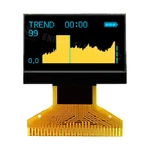
LCD
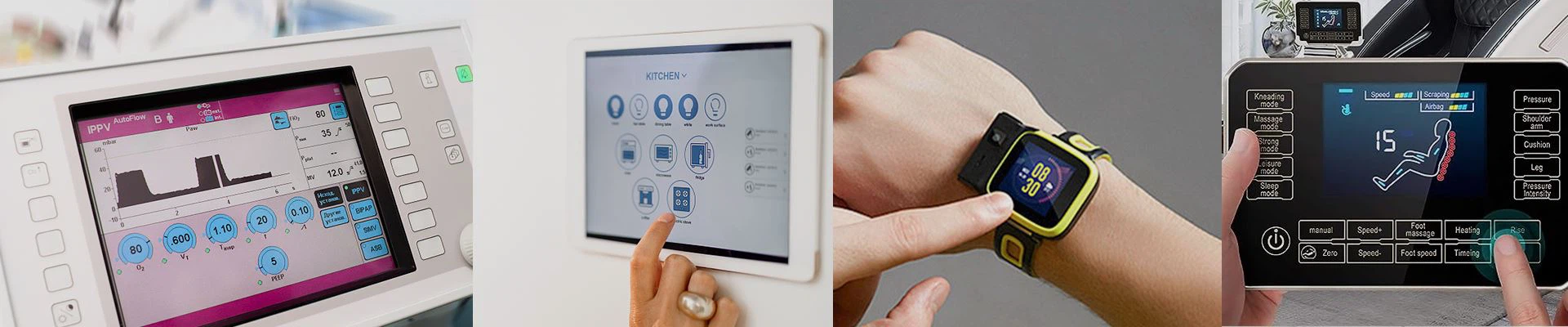
Established in 2012, Shenzhen Enrich Electronics Co.,Ltd is a manufacturer and solution provider of intelligent terminal LCD displays integrating R&D, design, production, sales and service. We are committed to producing monochrome LCD display, include segment LCD, graphic LCD, and color TFT LCD, OLED display.
Why Choose Us
Customization Service
We offer highly personalized customization services, meticulously designing and tailoring each product to meet the specific requirements of our clients, ensuring that every item fulfills their unique needs.
Quality Control
We have implemented a stringent quality control system, where all products undergo multiple rounds of rigorous testing and aging tests before shipment to ensure they are stable, reliable, and meet industry standards.
Advanced Equipment
Our company is equipped with state-of-the-art production facilities and ample production space, featuring 9 COG bonding lines, 8 LCD module assembly lines, 10 backlight assembly lines, 6 COB bonding lines, 10 automatic TFT module production lines, 8 automatic polarizer production lines, and 1 SMT production line, ensuring efficient and high-quality manufacturing processes.
Professional Team
We have an experienced engineering team with extensive cross-domain expertise and technical capabilities, capable of providing professional technical consultations and comprehensive solutions for clients across various industries.




Customization Options for LCD
● LCD Module
Features: Brightness, thickness, image resolution, display active area, power consumption
Outer frame: Material, structure for cooling and installation for the terminal
● Interface
Type of interface: MCU, SPI, RGB, MIPI, EDP, LVDS
Other features: Pin number, size, length
● Touch Screen
Touchscreen type: Capacitive and resistive touch screen
Touch function: One-touch, multi-touch
● Cover Glass
Features: Thickness, hardness
Surface finish: Cosmetic of all in black, anti-fingerprint, anti-bacterial, anti-glare
● Controller Board
Interface coversion: RGB to MIPI, HDMI; LVDS to HDMI; MIPI to HDMI
Features: Size, layout design, extended temperature coating
Functions: Resolutions and ports supported
● Others
Cables, connectors, and other components applicable to your need
LCD Technical Data
Electrical Characteristics
|
Item |
Symbol |
Condit. |
Min |
Typ |
Max |
Unit |
|
Supply Voltage for LCD |
VDD-VO |
Ta=0°C, Ta=25°C, Ta=50°C |
|
4.5 |
|
V |
|
Input High Voltage |
VIH |
|
2.2 |
|
VDD |
V |
|
Input Low Voltage |
VIL |
|
0.3 |
|
0.6 |
V |
|
Output High Voltage |
VOH |
|
2.4 |
|
|
V |
|
Output Low Voltage |
VOL |
|
|
|
0.4 |
V |
|
Supply Current |
IDD |
VDD=5V |
|
2.0 |
4.0 |
mA |
Mechanical Characteristics
|
Item |
Dimensions |
Unit |
|
LCD Size |
80 x 36 |
mm |
|
Viewing Area |
64 x 16 |
mm |
|
Dot Size |
0.55 x 0.66 |
mm |
|
Dot Pitch |
0.60 x 0.70 |
mm |
|
Character Size |
2.96 x 5.56 |
mm |
|
Character Pitch |
3.55 x 5.94 |
mm |
|
LCD Thickness |
9.5 |
mm |
Absolute Maximum Ratings
|
Item |
Symbol |
Min |
Typ |
Max |
Units |
|
Operating Temp. |
Top |
0 |
|
+50 |
°C |
|
Storage Temp. |
Tst |
-20 |
|
+70 |
°C |
|
Input Voltage |
Vi |
Vss |
|
Vdd |
V |
|
Supply Voltage for Logic |
Vdd-Vss |
2.7 |
5.0 |
5.5 |
V |
|
Supply Voltage for LCD |
Vdd-Vo |
3.0 |
|
13.0 |
V |
Interface Pin Connections
|
Pin No |
Symbol |
Level |
Function |
|
1 |
Vss |
|
GND(0V) |
|
2 |
Vdd |
|
Vcc(+5V±5%) |
|
3 |
Vo |
|
Contrast Adjust |
|
4 |
RS |
H/L |
Register Select |
|
5 |
R/W |
H/L |
Read/Write |
|
6 |
E |
H/L |
Enable Signal |
|
7 |
DB0 |
H/L |
Data Bit 0 |
|
8 |
DB1 |
H/L |
Data Bit 1 |
|
9 |
DB2 |
H/L |
Data Bit 2 |
|
10 |
DB3 |
H/L |
Data Bit 3 |
|
11 |
DB4 |
H/L |
Data Bit 4 |
|
12 |
DB5 |
H/L |
Data Bit 5 |
|
13 |
DB6 |
H/L |
Data Bit 6 |
|
14 |
DB7 |
H/L |
Data Bit 7 |
|
15 |
NC |
|
Not Connected |
|
16 |
NC |
|
Not Connected |
Display Character Address Code
|
Display Position |
1 |
2 |
3 |
4 |
5 |
6 |
7 |
8 |
|
DD RAM Address - Row 1 |
80 |
81 |
82 |
83 |
84 |
85 |
86 |
87 |
|
DD RAM Address - Row 2 |
C0 |
C1 |
C2 |
C3 |
C4 |
C5 |
C6 |
C7 |
|
Display Position |
9 |
10 |
11 |
12 |
13 |
14 |
15 |
16 |
|
DD RAM Address - Row 1 |
88 |
89 |
8A |
8B |
8C |
8D |
8E |
8F |
|
DD RAM Address - Row 2 |
C8 |
C9 |
CA |
CB |
CC |
CD |
CE |
CF |
Types of LCD
LCD Displays
LCD (Liquid Crystal Display) is a type of flat panel display which uses liquid crystals in its primary form of operation. LEDs have a large and varying set of use cases for consumers and businesses, as they can be commonly found in smartphones, televisions, computer monitors and instrument panels.
Graphic LCD
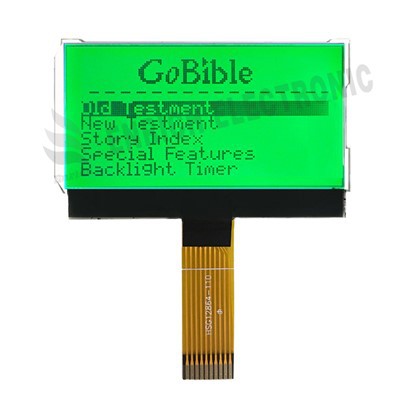
A Graphic LCD display is just as its name implies. This LCD module is able to display images, letters and numbers that are generated through the customer's software. Dot Matrix displays are identified by two sets of numbers.
Character LCD
The character LCD display, sometimes referred to as an alphanumeric display, is equipped with a character table that has pre-loaded letters, numbers, and punctuation. The table allows the designer to call out the requested character by addressing the number of that character.
Segment LCD
Segment LCDs, also called static displays or glass-only displays, are constructed of two pieces of ITO (Indium tin oxide) glass with a twisted nematic fluid sandwiched in between. A static display is a segment display with one pin for every one segment.
Characteristics of LCD
Energy Efficiency
One of the key characteristics of LCDs is their energy efficiency. Unlike traditional cathode ray tube (CRT) monitors that require a significant amount of power to operate, LCDs require only a small amount of electricity. This efficiency results from the LCD's use of a backlight to illuminate the liquid crystals, a stark contrast to the power-intensive electron beams used by CRTs.
High Resolution and Quality
LCDs offer high-resolution imagery and superior quality visuals. The exceptional pixel density ensures crisp, clear images with vibrant colors, creating an immersive viewing experience. Each pixel on an LCD contains separate sub-pixels for red, green, and blue (RGB), which work together to produce the full spectrum of colors.
Lightweight and Thin
LCDs are notably lightweight and thin, a characteristic that has revolutionized the design of digital devices. The slim profile of LCD screens allows for compact, portable designs, making them ideal for handheld devices like smartphones and tablets, as well as for larger displays like TVs and computer monitors.
Long Lifespan
LCDs are known for their durability and long lifespan. Unlike CRTs or plasma displays, which can degrade over time, LCDs maintain their quality for many years, often outliving the lifespan of the devices they're installed in.
Flexibility in Sizes and Shapes
LCD technology offers flexibility in sizes and shapes, making it adaptable to a variety of applications. From small screens on digital watches to massive television displays, LCDs can be customized to fit almost any size requirement.
The LCD is constructed from two pieces of polarized glass. There are two electrodes used: a positive electrode and a negative electrode.
External voltage is applied to the LCD to LCD using these electrodes and it is made up of indium-tin-oxide. A 10–20 µm liquid crystal layer is sandwiched between two sheets of glass.
By altering the polarization, light can be transmitted through or prevented.

Applications of LCD
Consumer Electronics
Automotive
Medical Devices
Industrial Automation
Wearable Devices
Kindly send us your initial drawing paper,samples or photos; if you don't have these information,please let me know your idea.
Then we give you solution and estimate price. (Size won't affect the custom fees,but will affect the unit price.)
Negotiate the technical data and we give exact quotation.
You arrange the custom fees.
Our engineer design the LCD drawing for your confirmation within 1-3 days.
New samples will be finished within 15-20 days.
After samples confirmation, warmly welcome the mass production.
Packing

LCD Production Process Flow Chart
Enrich,Make it easier to use LCD

Certificate


